Personal info
Known for
Director
Gender
Male
Birthday
19 February
Location
New York, United States
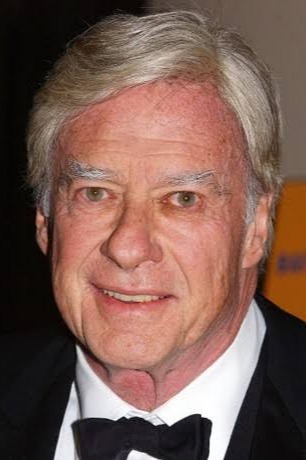
Edit pageJohn Frankenheimer
Biography
John Frankenheimer was an American film and television director whose career spanned more than five decades. He became known for his powerful visual style, complex characters, and films dealing with politics, psychology, technology, and social issues.
Early Life
John Frankenheimer was born on February 19, 1930, in Queens, New York City. He developed an interest in filmmaking while serving in the United States Air Force, where he worked on training films.
After leaving the military, he began his professional career in television.
Television Career
Frankenheimer became one of the leading television directors of the 1950s. He directed episodes of numerous live television programs and became known for his ability to create sophisticated drama under the demanding conditions of live broadcasting.
His television work included programs such as Playhouse 90, Climax!, and Ford Television Theatre.
His success in television eventually led him into feature filmmaking.
Film Career
Frankenheimer made his feature-film directing debut with ** The Young Stranger (1957)**.
He subsequently directed a series of acclaimed films, often focusing on political conspiracies, psychological conflict, and individuals struggling against powerful institutions.
His major films included:
- The Young Stranger (1957)
- The Young Savages (1961)
- Birdman of Alcatraz (1962)
- The Manchurian Candidate (1962)
- Seven Days in May (1964)
- The Train (1964)
- Seconds (1966)
- Grand Prix (1966)
- The Gypsy Moths (1969)
- Black Sunday (1977)
- Ronin (1998)
The Manchurian Candidate
One of Frankenheimer's most celebrated films was ** The Manchurian Candidate (1962)**.
The political thriller starred Frank Sinatra, Laurence Harvey, and Angela Lansbury. It explored brainwashing, political manipulation, and Cold War paranoia.
The film became a landmark of American political cinema and established Frankenheimer as a major director of sophisticated thrillers.
Birdman of Alcatraz
Frankenheimer directed ** Birdman of Alcatraz (1962)**, starring Burt Lancaster.
The film was based on the life of Robert Stroud, a prisoner who became known for studying birds while incarcerated.
Lancaster received an Academy Award nomination for his performance, while the film received several other major award nominations.
Seven Days in May
In ** Seven Days in May (1964)**, Frankenheimer explored the possibility of a military coup against the President of the United States.
The film starred Kirk Douglas, Burt Lancaster, Fredric March, and Ava Gardner.
It was praised for its political suspense and became an important Cold War-era thriller.
The Train
Frankenheimer directed ** The Train (1964)**, an action drama starring Burt Lancaster.
The film follows a French railway inspector and members of the Resistance attempting to prevent Nazi forces from transporting valuable works of art out of France during World War II.
Its large-scale action sequences and realistic filmmaking became major features of Frankenheimer's style.
Seconds
One of his most visually distinctive films was ** Seconds (1966)**.
The psychological science-fiction thriller starred Rock Hudson as a middle-aged man who undergoes a radical transformation that promises him a new identity and life.
The film explored themes of identity, aging, dissatisfaction, and the desire to escape one's past.
Grand Prix
Frankenheimer demonstrated his technical skill with ** Grand Prix (1966)**, a racing drama starring James Garner, Eva Marie Saint, and Yves Montand.
The film was praised for its innovative use of camera techniques and realistic racing sequences. It won three Academy Awards, including awards for editing, sound effects, and cinematography.
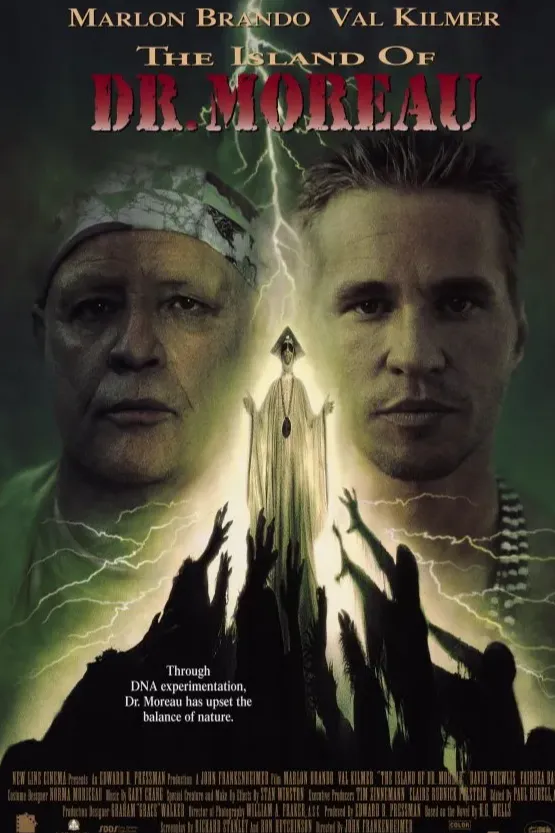
The Island of Dr. Moreau
Frankenheimer later directed ** The Island of Dr. Moreau (1996)**, based on H. G. Wells' classic science-fiction novel.
The film starred Marlon Brando, David Thewlis, and Val Kilmer. Brando portrayed the scientist Dr. Moreau, who conducts experiments that transform animals into human-like creatures.
The production became known for its troubled production history and behind-the-scenes difficulties.
Ronin
Among Frankenheimer's final major films was ** Ronin (1998)**, starring Robert De Niro, Jean Reno, Natascha McElhone, and Stellan Skarsgård.
The crime thriller became particularly famous for its realistic and elaborate car-chase sequences.
It demonstrated that Frankenheimer remained capable of creating technically impressive action cinema late in his career.
Directing Style
Frankenheimer was known for his dynamic camera movement, wide-angle photography, long takes, and immersive action sequences.
He frequently used unusual camera positions to place viewers directly inside the action. His films also explored themes such as political power, paranoia, identity, technology, and institutional control.
Awards and Recognition
Frankenheimer received numerous awards and nominations during his career.
He won several Primetime Emmy Awards for his television work and received major recognition for films including The Manchurian Candidate, Birdman of Alcatraz, and Grand Prix.
He was also honored for his contributions to American television and cinema.
Personal Life
Frankenheimer was married three times and had two daughters. He remained active in filmmaking throughout his later years.
Death
John Frankenheimer died on July 6, 2002, in Los Angeles, California, at the age of 72. He died from a stroke following complications from spinal surgery.